Small Church Makes Big Impact in Disaster-Stricken Community
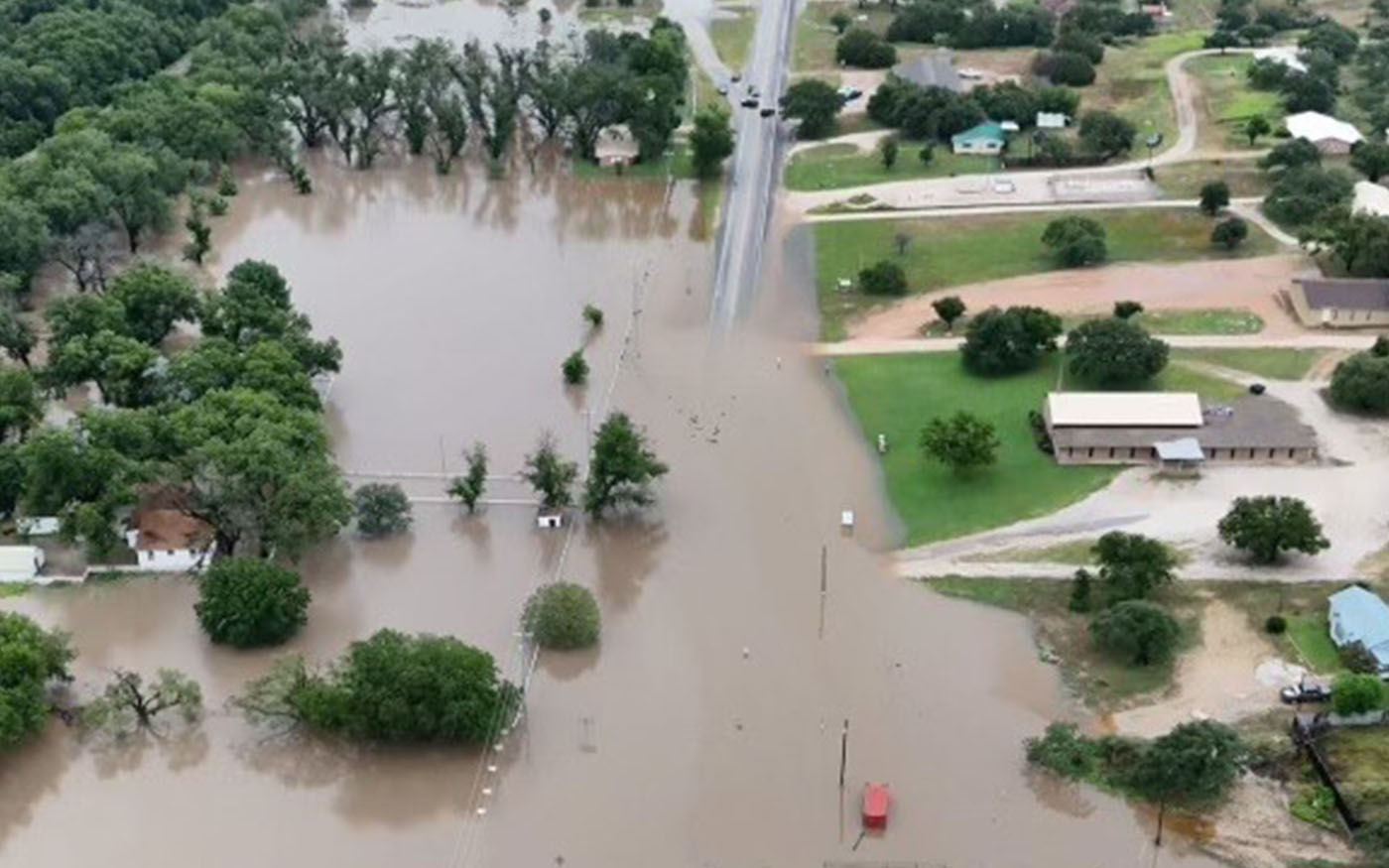
In early July over two feet of rain fell in roughly a 96-hour period in San Saba, a community of 3,100 residents.
“There were four days between two 80-year floods,” Pearce explains. “It has been 87 years since the water had gotten even close to that high . . . the rain started on July 3rd and on the 4th, we were told to evacuate.”
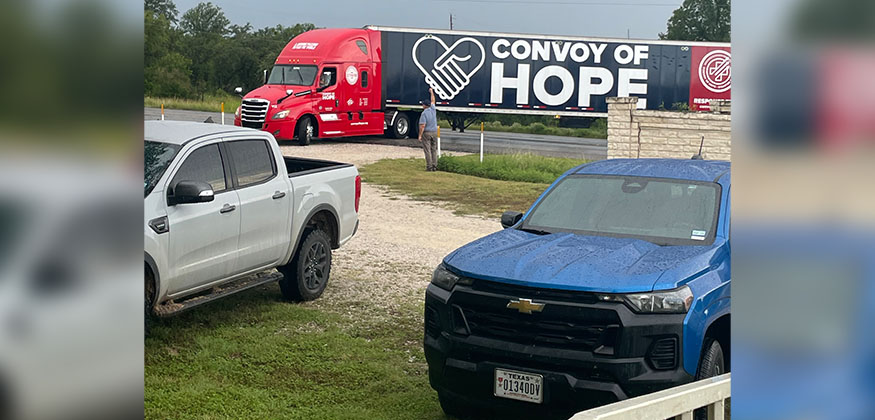
However, after that first disastrous rain and flood damage, Pearce connected with Convoy of Hope, the Assemblies of God compassion partner. A semi-truck of food, water, and supplies arrived at the church on Monday, July 7, as the flood waters had receded.
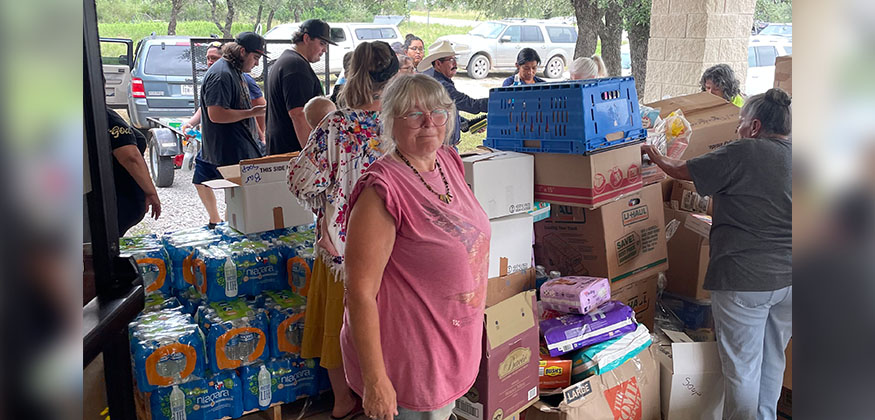
The distribution process than began with the congregation, whose average age is 71, working far beyond expectations of community members, to provide food and water to those in need.
But the rains came again two days later, and a mandatory evacuation was given to residents.
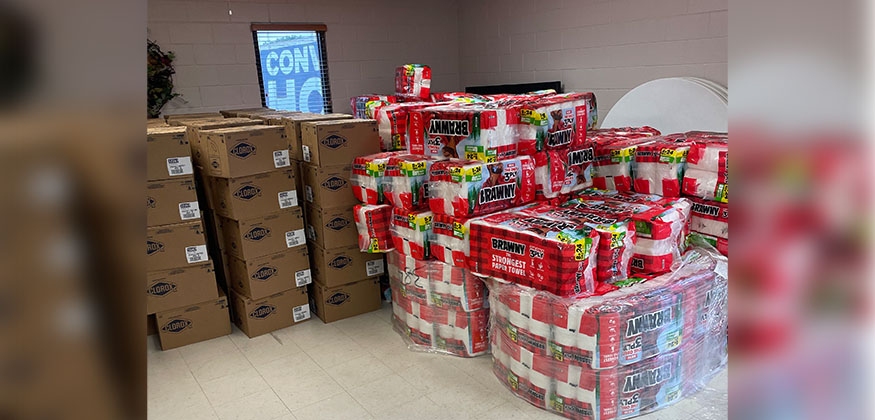
Once again, as the waters dissipated, First Assembly became the focal point for food and water along with hygiene items, diapers, and clean-up supplies for the community as Convoy of Hope delivered three more truckloads of relief. In addition, several other organizations brought by trailer loads of food and clothing.
“Our tiny church was able to deliver 80 tons of food and supplies to the community and throughout the county,” Pearce says. “We’ve been able to do things, I mean, it has been supernatural!”
Pearce, and his wife, Julie, who are both 53, are considered the young adults of the church, with their sons, ages 25 and 33, the youth.
“We were the main source of food and clean water for the community for almost two weeks,” Pearce says. “We had about 4,000 interactions, we ministered to roughly 800 to 1,000 families, gave out pallet after pallet of family food boxes, and probably prayed for around 1,000 people . . . and that first truck, six of us from the church unloaded that entire truckload of food and supplies into the church.”
Pearce says that at times, as they were unloading trucks, the demand was so great that as things were unloaded, they were giving it away before the items could make it inside the church.
“We had one group who brought a trailer loaded with 18,000 pounds of food and clothing and dropped it off on the church porch,” Pearce says. “And so, two of our older women were up on the church porch working, giving stuff away . . . people from Convoy of Hope were awe-inspired, they were like, ‘Wow! This is crazy! Just these two little old ladies doing this!’”
Sandra Newby, 84, relocated to San Saba in 1988 when her husband died. She is a long-time church member and well-known by many in the community as she worked for 17 years at the school.
“We were fixing boxes up [with food and supplies] and taking it out to people who couldn’t come in to get any,” Newby says. “And the elderly who came and needed help getting things to their vehicles, we helped them with that . . . whatever needed to be done we did.”
Expressing her thankfulness to God for good health — as she still mows and weed eats her own yard — Newby says people couldn’t get over what their small church had done for the community.
“I’m just so glad we were able to help these people,” she says, noting they’re still giving out hygiene items. “They just needed to know somebody was out there for them in their time of need.”
Pearce, who has been leading First Assembly since 2020, says that through the double disasters, the church has become well-recognized and appreciated by the people of San Saba — noting that it’s not uncommon to get hugs and “thank yous” from individuals who the church has helped. He also says that people have started coming to the church on a regular basis, asking for prayer — something that didn’t happen before.
“The county judge asked us to be a part of the emergency response team,” Pearce says, “and now I’m on the long-term recovery committee and the ministerial alliance as well.”
Theresa Masters, 65, was also a part of the volunteer force from First Assembly. She says that the church’s effort really impacted people.
“A lot of them were amazed — they didn’t understand how we were doing this,” Masters says. “They had never seen something like this.”
Masters, who works a lot with the local Hispanic community, says she now frequently encounters people who want to attend First Assembly.
“Pastor Dave, he’s a people person, friendly and personable,” Masters says. “He makes it a point of trying to communicate with all people, embracing people of different races . . . he’s even played Spanish music at the church and he’s trying to learn to speak Spanish himself!”
Although the small First Assembly church body has stepped up far beyond anyone’s expectation in this time of need, Pearce says that they haven’t been the only ones helping. The local Baptist church has been heading up the mucking out of homes and the tearing out of ruined drywall. Samaritan’s Purse has been an ongoing presence as well. Yet, Pearce directs all praise to God.
“It’s the Holy Spirit,” he says. “It has just been phenomenal to see what God has done.”
Masters agrees, stating: “It’s just been a wonderful experience, to think that the Lord has chosen such a small church to be a light to our community — to help people, minister to them, pray for them — it’s been a real blessing for us.”
Although several families have visited the church as the result of the church’s efforts, Pearce explains that a lot of people are not living in town as they haven’t been permitted to rebuild yet. In addition, few homeowners — if any — had flood insurance as the location wasn’t considered a flood zone.
“There are probably more than 100 homes not occupied right now,” he says. “And rebuilding is going to be difficult and expensive as now homes will have to meet new building standards.”
And Pearce knows what he’s talking about. His own home had two feet of standing water underneath it as the water table had risen so high. He’s been told the foundation has been destroyed and the floors in the home have deteriorated due to the moisture.
“We have a post and beam home, and the posts also did not fare well,” Pearce says. “And our septic system has to be entirely replaced due to the new requirements.”
Yet, despite the personal hardships, Pearce is looking forward to greater involvement in the community and for the church to continue to grow as people return.
“When we first came, we had a congregation of three people,” Pearce says, “but now people know our address and they know our faces . . . and a lot of people know our church is there in a way they didn’t before.”